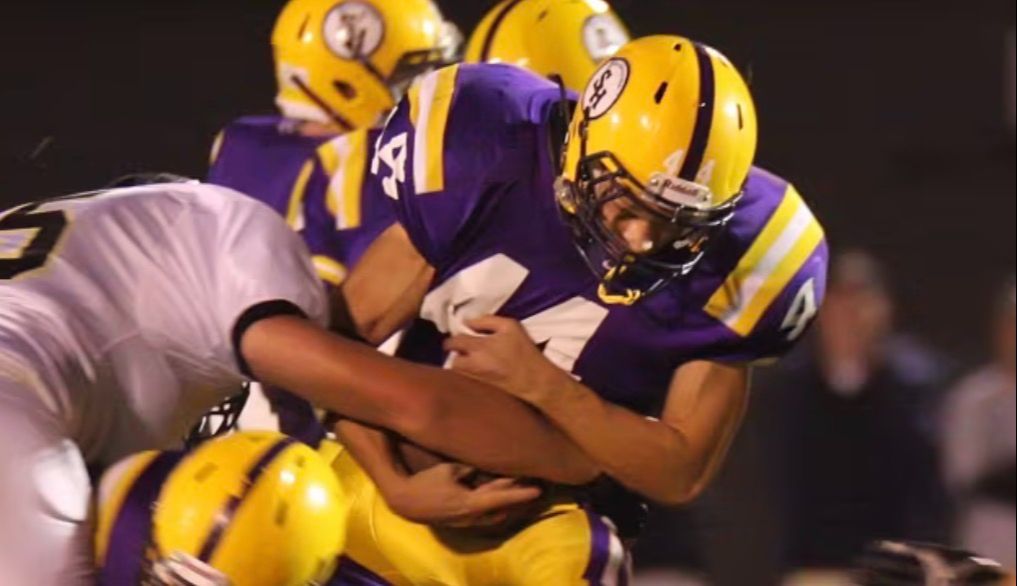
When people think about CTE, they usually imagine retired professional athletes. Men in their 50s or 60s. Long careers. Decades of punishment.
But the youngest confirmed case of CTE tells a very different story.
His name was Nathan Stiles.
He was 17 years old.
A high school football player.
A teenager with a developing brain.
And after his death, CTE was found in his brain.
The part most people don’t know
Just weeks before Nathan died, his parents did what responsible parents are told to do.
They took him to the doctor.
He had been experiencing symptoms after head impacts, and they were concerned enough to seek medical care. Imaging was ordered. A CT scan was done.
The result?
They were told everything looked fine.
No bleeding. No skull fracture. No “emergency.”
He was sent home.
And this is where the story becomes painfully instructive.
What happened next
Nathan later took another hit during a football game.
He collapsed on the field.
He died shortly afterward.
When his brain was examined post-mortem, researchers found early-stage CTE.
That finding stunned the medical community.
Not because CTE exists — but because it was already present in a 17-year-old.
This wasn’t about one hit
This is one of the most misunderstood parts of CTE.
CTE is not caused by a single concussion.
It’s associated with:
The final hit was catastrophic.
But the disease process had already begun long before that day.
What the data tells us about youth football and CTE
Research from the Boston University CTE Center has shown:
-
For every year a child plays tackle football before age 12, the odds of developing CTE later in life increase by approximately 30%
-
Starting tackle football at younger ages is linked to earlier symptom onset — sometimes by decades
-
Duration of exposure matters as much as, or more than, the number of diagnosed concussions
In other words:
It’s not just how hard the hits are — it’s how early and how often they happen.
Concussions in youth sports are more common than we think
Some important context:
-
Millions of sports-related concussions occur each year in the U.S.
-
Youth athletes make up a large share
-
Many concussions are never reported
-
Many athletes return to play before the brain has fully recovered
-
“Cleared” often means symptom-free — not neurologically healed
And crucially: CTE does not require diagnosed concussions. Repetitive head impacts alone can be enough.
Why young brains are at higher risk
Children and teens:
-
Have less neck strength to absorb force
-
Have brains still undergoing wiring and pruning
-
Are more vulnerable to inflammation and metabolic injury
-
Can appear “better” before the brain is actually healed
Which makes the idea that “kids bounce back” not just wrong — but dangerous.
Why I created my concussion course
Nathan’s story highlights a massive gap.
His parents did what they were told.
They sought medical care.
They trusted the scan.
But no one explained what a CT scan can’t see.
No one explained cumulative risk.
No one explained how fragile the brain can be after repeated hits.
That’s exactly why I created my concussion course.
In it, I break down:
-
What really happens to the brain during a concussion
-
Why normal imaging doesn’t equal a healthy brain
-
The steps that lead to repeat injury
-
How to recognize incomplete recovery
-
How to reduce long-term risk — especially in young athletes
That means personalized guidance — not guesswork.
Final thought
Nathan Stiles’ story isn’t about blame.
It’s about awareness.
A normal scan doesn’t mean a safe brain.
A young athlete isn’t automatically resilient.
And waiting until something looks catastrophic is often too late.
If we take concussions seriously earlier — we can change outcomes.
And that’s the entire point.
|